A Case for Political Chameleonism
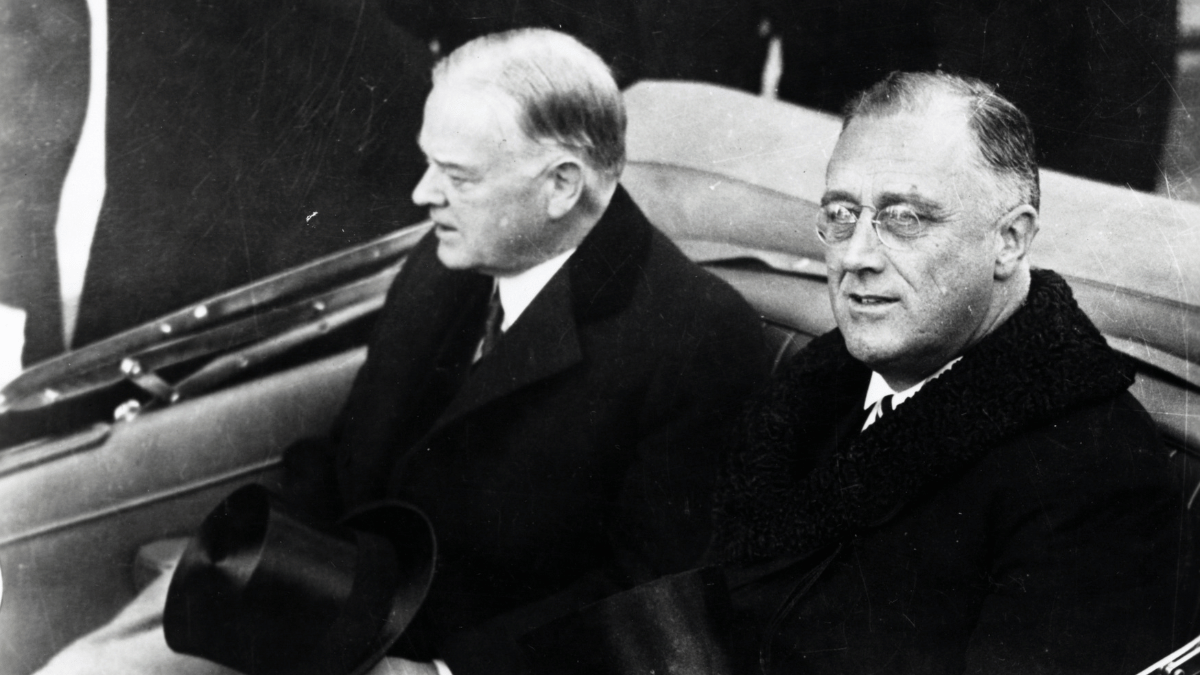
In 1919, with the end of the first World War just in the rear view, an ambitious young politician from New York approached the businessman Herbert Hoover in a plan to join him on his presidential ticket. That ambitious young politician would go on to 12 years later to serve as the 42nd president of the United States, the only president to serve more than two terms, Franklin Delano Roosevelt.
But in 1920 he was still a political star on the rise, having just served as the Under Secretary of the Navy for 7 years. Hoover, on the other hand, was a hot electoral commodity. He had pivoted from private industry - where he had run a consulting business for mining companies around the world - to becoming one of the most pronounced public servants in the country. In 1917, he was appointed the U.S. Food Administration director in charge at a moment where securing food for American troops deployed in Europe and maintaining food pricing at home was of major importance. When the war ended, Hoover was appointed the head of the American Relief Administration which oversaw the rebuilding of critical infrastructure on the war-torn European continent.
Hoover’s profile was riding high when a young Franklin Delano Roosevelt sought to couple his ambitions with Hoover’s mix of business and public service acumen. Ultimately, Hoover chose to run as a Republican in 2020. Roosevelt remained in the Democratic party and Hoover lost his primary bid to Warren G. Harding. Fast forward to 1932 and the man who became known by his initials, FDR, would wallop a then President Hoover. Winning all but 6 states and 57% of the vote, FDR started what would end up being known as the most progressive period in American politics.
Hoover had entered public consciousness as a business oriented progressive, advocating for minimum wage and an end to child labor. He left the White House a diminished figure. His inability to handle the Great Depression left him appearing disconnected and uninterested in the plight of average Americans.
The presidency of Herbert Hoover is an example of the ways in which high political office shapes the participant more than the participant shapes it. Hoover had been a smart and effective leader, both in business and government, but his pre-conceived notions about what was the right course of action in the presidency led to 4 years of playing catch-up. His rigidity, inability to change opinion and adapt to the moment, made him a failed president.
Roosevelt was in many ways the opposite. FDR was considered affable, relaxed, cordial, and uncommitted in his political leanings. He was at his core an ambitious people pleaser. As the political historian Richard Hofstadter described him “..he hated to disappoint, liked to play the bountiful friend. He felt that if a large number of people wanted something very badly, it was important that they be given some measure of satisfaction—and he allowed neither economic dogmas nor political precedents to inhibit him.”
It might even be said that the young FDR was a vacuous character. While at Harvard, instead of rallying for political causes or exploring dangerous ideas, he wrote pieces in the school paper about football morale and school spirit. What he lacked in substance he made up for in vigor. He entered politics in 1910 by campaigning by car for a New York state senate seat which haden’t elected a Democrat for more than 50 years. After his stint as Assistant Secretary of the Navy, Roosevelt tried his hand unsuccessfully in business before successfully running for Governor of New York in 1928.
His future reputation as progressive was only formative during these years. While his time in the New York senate was marked by his role in trying to break Tammany Hall’s influence over state politics. His role with the navy was one of expansion. He showed little regard for regulation or precedents. In his brief years in the wilderness, he was part of a holding company which aimed to open a chain of clerkless convenience stores. And during a Fourth of July speech as Governor, he extolled the dangers of government interference in business arguing that there should be a complete separation between the two. Just before the Great Depression, Governor Roosevelt ignored a report on the precarity of the banking industry and appointed a director from the Bank of the United States to make a report. Unsurprisingly, his commissioned report saw no faults in the banking industry. The man who would several years later sign into law the most comprehensive banking regulations in American history looked at the industry on the eve of its collapse and gave it a clean bill of health.
And yet, the four terms of the Roosevelt presidency are known for their transformative economic agenda. The New Deal was an amazing use of state power to transform industry, guarantee the stability of working people, and it definitively stamped a period in which the American government was anything but separated from the operation of business.
What is the utility of the Franklin Delano Roosevelt story? The lesson for political activists is that democratic politics rarely see great success from dogged policy consistency. Unlike our idealized view of the perfect candidate, ambition will always play a role in the life of a politician and positive ambition is almost always more important than ideological ambition.
Hoover entered office with a strong resume of leadership. He’d successfully guided countless businesses during his time as a consultant. He admirably directed government resources to provide for the reconstruction of war-torn Europe while also ensuring a stable food economy at home. He had ideas about how to run an organization and how to run a government so as best to benefit the greatest number of people. Yet when he took the office of the most important leader in the country, he was hamstrung by a set of rigid policy beliefs. He had not the flexibility to handle multiple constituencies nor the humility to turn-face on his priory convictions and attempt to forge something new.
Roosevelt was a social chameleon. His insatiable people pleasing required him to hold many views, to change his policy preferences, and to accept an idea for one moment before showing it the door in the next. And yet, those qualities allowed him to build one of the most enduring and popular political movements in American history. One of his early advisors, Raymond Moley remarked “The frightening aspect of his methods is FDR’s great receptivity. So far as I know he makes no efforts to check up on anything that I or anyone else has told him.”
This in some respects is reminiscent of the current occupant of the White House. Through his two terms, Donald Trump has been noted to leave every conversation believing in whatever the last person he spoke to. Trump’s political career also includes a genuinely fluid policy landscape. Showing a receptivity to following whatever he feels is the most popular position. Although this may be where the similarities end. Trump has failed to build a lasting popular movement due to his own character flaws which include extreme narcissism and a mean streak against perceived enemies.
While FDR and Trump show varying examples of success to political chameleonism, it’s not the one-way ticket to electoral success. In 2004, John Kerry’s run for president was tanked by the perception that he was a “flip flopper” or “waffler” who had shifted his positions over time. Kamala Harris was pinned for the difference between her positions in the 2020 Democratic primary campaign and her 2024 Presidential campaign.
“Go with the flow” is a political skill but only if operated by a politician who can connect with voters on a personal level. Not only was Herbert Hoover inflexible during his time in office, he also lacked the social skills and charism to connect with the American people. FDR on the other hand, knew how to communicate the message people most wanted to hear. He connected with the electorate in a way which allowed him to be politically experimental. His flip flops were fine because they fit his feet so well.
I’m writing this on the day in which British Prime Minister Keir Starmer announced he will step down as Labour leader and thus as Prime Minister. Everyone expects popular former mayor of Greater Manchester, Andy Burnham to be the next in line. Burnham has been around the Labour block and his greatest detractors come from those who point out his stylish flip flops.
Burnham was first elected to the House of Commons in 2001 and quickly found his way into first the Tony Blair cabinet and then the Gordon Brown cabinet. He unsuccessfully stood for leader of the Labour party in both 2010 and 2015. In 2017 he left parliament and won election to the Mayorship of Greater Manchester. In 2021 and 2024 she won reelection by large margins.
Burnham has a reputation as a progressive in the party but there are still portions of the left which view him with suspicion from his years as a New Labour minister. However, Burnham has also pushed for progressive reforms during his time as mayor, including nationalising city buses and ensuring transit fare caps. He also navigated the COVID-19 epidemic by procuring greater funding to the city and preventing it from being placed in the UK’s most restrictive containment zone.
I have no idea if Andy Burnham will have what it takes to provide positive leadership for the United Kingdom, their problems are greater than just who lives at 10 Downing Street. But his time in politics, going from minister for Tony Blair to shadow minister for Jeremy Corbyn to progressive Mayor of Greater Manchester should be viewed through the lens of a charismatic political chameleon. One who appears to put the shifting views of his constituents above his ideological convictions. If he can connect with the citizens of the UK like he’s connected with the people of Greater Manchester, he may just be able to forge a new path for a country which has been rudderless and taking on water since leaving the EU.
Burnham should take a page out of FDR’s handbook, don’t let political dogma or past commitments force your hand, be politically adventurous and experimental. Take the task of governance on with the positive fervor of attempting ambitious programs, and if they don’t work, abandoning them for something else.
The political chameleon doesn’t always have to be right, they just have to have the ability to get right and to take their constituents along with them.