What's so folk about that?
What happened to American folk culture? America as an idea has long been the culmination of rural communities, building their own traditions and culture off the back of diasporic immigration, religious fervor, and regional economic opportunities. A land so large and diverse that its founders struggled to build a political system to represent the interests of its original 13 states. Now, after adding 37 states, exploding from 2.5 million to 340 million people, and becoming a world leading power, the United States of America is less culturally diverse than at any other time.
A rural country by conception, America has never really come to grips with its rapid transformation from industrial to post-industrial super-power. The exact definition changes depending on who’s counting, but based on the U.S. Census, the US became a majority urban country in the 1920s and is considered 80% urban as of the 2020 census. This rapid urbanization wasn’t anticipated by the American founders who, while holding a panacea of beliefs, broadly accepted the Jeffersonian vision of America as a country built by and for the independent farmer. The political system they built, centered on representation of the rural, because they never anticipated an alternative, nationalized politics. The urban percentage of the original 13 colonies at independence was a mere 5%.
Even as rural America has become a distinct minority of the country, the romanticism and cultural impact of the folk is undeniable. Rural is considered real, the true progeny of the founding, a people both affected by de-industrialization and effecting on the body politic. Real America is rural — urban America is decadent, foreign and dangerous.
Because America has always defined itself by the rural, folk culture has had a tremendous impact on American culture overall. The folk music of Appalachia and the Mississippi delta contributed to rock-n-roll, jazz, hip-hop and the sounds of modern pop. But turn on a local radio station today in rural America and you’re more likely to hear billboard topping country than real expressions of folk living. As the percentage of rural people shrunk, the homogenization of Radio, television and now hyper-homogenization of the internet and social media has killed off any meaningful expression of American folk culture.
Folk Culture - Sui Generis and Homogenous
What do we mean by folk culture? The academic field of folklore studies attempts to figure out what folk culture is and means and is in many ways tied to the phenomenon of urbanization and consolidation. Early folklorists were employed in late 18th century Europe to help define the nation. By highlighting folk traditions and cultures, political figures could construct a vision of their nation that was pure, particular, and most importantly useful for accumulating and wielding political strength.
The world of the late 18th century was exceptionally rural and almost entirely atomized. In 1794, the French Constitutional Bishop, Henri Grégoire authored a report on the necessity to eliminate regional patois and institutionalize a singular form of the French language. What Grégoire recognized was the incredible folk diversity present in revolutionary France. His report identified 33 spoken languages in France and he was concerned that this diversity would prevent individual citizens from adequately partaking in the new republican state. This localism and regionalism was common across the globe. Language, a crucial and shaping form of culture, developed from village-to-village, valley-to-valley, and from merchant visit-to-merchant visit. It’s why Danish, Swedish, and Norwegian are all mutually intelligible to one another yet distinctly separate languages. They share a linguistic history. But space, time and eventually political consolidation has rendered them three separate tongues. By the end of the 19th century, all of Europe had recognized the political and economic value of Grégoire’s observations. Nationalized education included making a formal version of the national language. Spelling was made official, grammar standardized, and regional differences stigmatized as backward and uneducated.
Standardizing language and national traditions is a way of perverting folk culture. It elevates particular snapshots of ruralism to represent everyone in the nation and reverses that snapshot down to demand that the people conform to that image. This mythmaking and cultural construction is described in the seminal work on nationalism, Imagined Communities by Benedict Anderson. Anderson argues that the process of taking specific snapshots of folk practice and culture and elevating them to be definitional for an entire people is the artificial process of nation building. To define what folk is versus what it is not requires a top-down decision making process which is antithetical to the creation and maintenance of folk culture in the first place. Removing the folk from folk culture and preserving it for national consumption.
Nation building isn’t a negative however. Whole societies have seen their material conditions radically transformed by the acceptance of cultural consolidation and its downstream effects of competent governance and economic dynamism. But it has made the question of what folk culture is more difficult to answer.
Still, even outside the nation making projects which have highlighted specific elements of folk culture the actual peoples and communities living their lives in rural places, building social rules and habits, adhering to local traditions and customs, making music and art continued without full adherence. While standardized language and nationalized education helped to draw disparate communities closer and create a new identity above their local traditions, it never fully homogenized the nation. Mass media, starting with radio but quickly supplanted by television, provided a new dissemination device which shaped culture from the urban towards the rural but also provided a means for the reverse, to broadcast folk culture to a nation.
Discovery and rediscovery of American folk culture
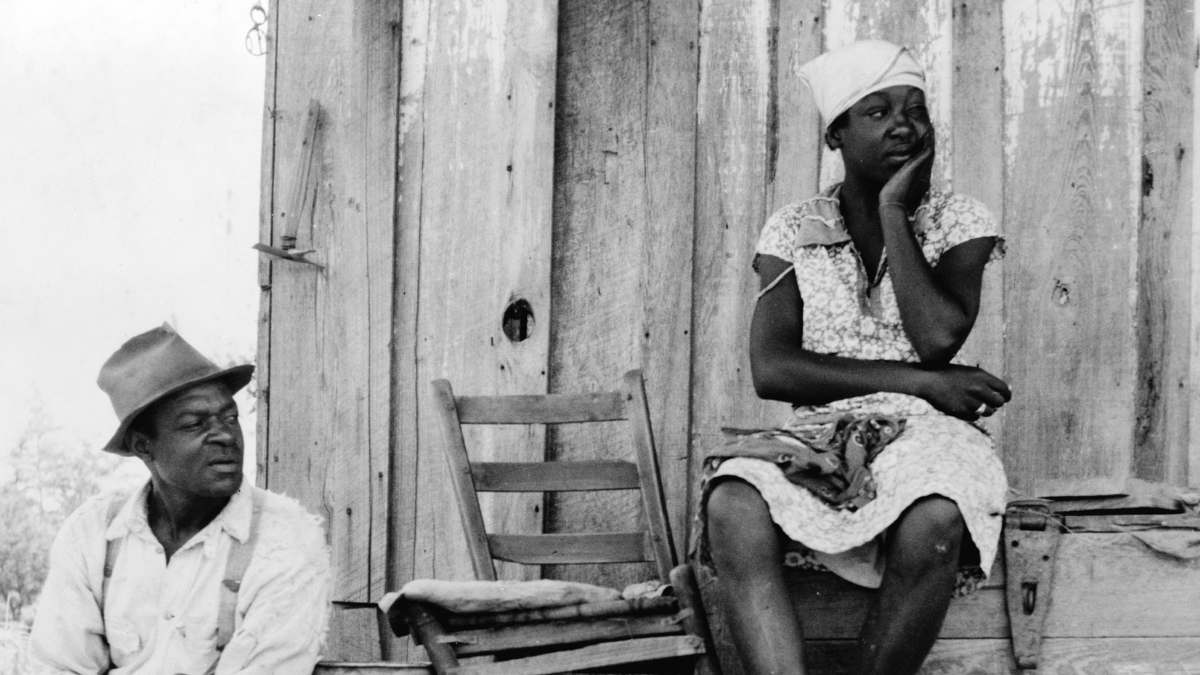
In 1932 folklorist John Lomax petitioned the Library of Congress to fund him in traveling America to record the sounds and songs of the rural. Over the next decade, Lomax, along with his son Alan, recorded and collected thousands of traditional, local songs from 33 states. In 1942, federal funding for the project ended but Alan continued the work on his own, traveling the backroads of America, the Caribbean, and Europe making field recordings of traditional songs, chants, sermons and stories. The Lomaxs helped to not only preserve musical folk culture but to bring it to a wider audience. Bringing national attention to artists like Woody Guthrie, Lead Belly, Muddy Waters, Pete Seeger, R.L. Burnside, Burl Ives, among many others.
What the Lomaxs recognized was that folk culture couldn’t be captured by the elements that seeped into the national consciousness, it had to be found where it was practiced. And, while they helped to nationalize many of the styles they recorded, they captured sounds and processes that would have otherwise been snuffed out by time and the progress of mass media. Those sounds and practices, which captured the life of the people living in rural places. Hardship, joy, simple pleasure, complex pains, and the human experience. Same as anywhere, but anywhere was there, in that place, on that recording.
Does folk culture necessarily have to be rural? No, but because folk culture is the construction of communities of connected individuals, rural folk culture has the advantage of fewer influences thus transforming slowly over time. Urban folk culture has many more competing influences and, being closer to economic and political power centers, often makes the jump from folk to mass culture as is the case with most fashion trends. It also means that urban folk culture can be more difficult to catalogue or understand, as competing influences make for quick stylistic changes. This doesn’t mean that rural folk culture is any more pure than urban folk culture, but it does mean it’s more endangered by mass culture.
Mass media, media culture, and the gaping maw of consumption
Americans in the 20th century experienced the effects of mass media more than any other group in human history. The explosion of radio and the power of television and movies coupled with the cultural hegemony of being the only territorially unscathed participant to come out of the second world war, meant that Americans were exposed to more national media and fewer outside influences. The strength of American mass media and culture was so affecting that it even bled into Western Europe where, following World War II, the rapid expansion of Coca-Cola led to fear in Paris that a neon sign advertising the soft drink would soon adorn the Eiffel Tower. Radio Free Europe, an American radio network set up to counteract Soviet Influence, was so popular that the Soviet Union declared that jazz music was decadent and had it banned. In 1947, 87% of all box office sales in Italy were for American made films.
This form of American mass media has been dubbed as ‘media culture,’ where the corporate and capital interests behind tv, radio, and film converged to shape and create a mono-culture centered on creating entertainment to further the consumption of products. In The Crisis in Culture, political philosopher Hannah Arendt distinguished between culture and entertainment as the difference between longevity and consumption. Culture are the tangible products which exist beyond themselves, while entertainment is built for consumption and thus must be constantly renewed. Culture which is solely designed to maximize profits is always fleeting, requiring reiteration after reintegration to keep an audience's attention. Arendt’s definitions are useful because I think what she is actually articulating as entertainment is more helpfully thought of today as media culture. Written in 1961, what Arendt was witnessing was the rapid growth and culturally transformative power of television.
In 1950, less than 10% of homes in America owned a television. Ten years later, that number had added a zero. Ninety percent of American households owned a television in 1960. Unlike other forms of technology, this transformation meant that what people did with their free time, what people consumed as entertainment became almost ubiquitously singular. Local communities still continued on, but the language and customs that they encountered now included whatever the national broadcasts wanted to highlight. Much like the educational reforms inspired by Grégoire in France homogenized and standardized language, the television depicted new proper norms, new cultural touchstones.
It must have been disorienting to live through such a technological and media revolution, but that is something we too have also recently experienced. The internet was a technological breakthrough, but I would argue its tremendous cultural influence only started to show its effect with the mass adoption of the smart phone. Similarly, television broadcasts began in 1928 in the United States but it was only once mass adoption of the mediating technology (televisions themselves) that mass culture or media culture began forming.
Television served to homogenize culture. Local cultures still existed, but it was more difficult to be genuinely folk anymore. The strength of outside influence on what to wear, how to speak, what to eat, and how to think meant that folk cultures were now competing with the television screen. An example of this phenomenon can be seen in the incredible diversity of styles presented in folk art before the advent of television. Folk art is locally produced items that most often have a utilitarian usage beyond their aesthetic beauty. The lack of folk art following the mass adoption of television is a capitalistic story, cheaply produced goods supplanted the need for creation of many local goods and simultaneously removed the individual artistic elements those pieces of folk art expressed. It’s also a mass culture story — you could now fill your home with the items advertised to you on your television.
The homogeneity of heterogeneous mediums
The television era lasted for roughly 50 years before being supplanted by the internet and, more importantly, the constant connection to the internet via the smart phone. In 2013, more than 50% of Americans owned smart phones — today that number is above 90%. We are living through a similarly transformative media era as our parents and grandparents did in the 1960s. However, as opposed to the advent of television broadcasts, the internet provides a vastly wider and more extensive landscape. If television wounded folk culture, is the variety of digital media healing it?
The internet was always going to change culture. Being able to upload all the knowledge of human history and allow anyone to access it from their living rooms was supposed to level the intellectual playing field. Access to information no longer required the physical means of getting to the library or consulting with an expert in person. Now we could simply search for what we wanted to know. What about social contact? Early forums and chat boards morphed into social media which allowed people to connect and communicate with friends, family, coworkers, classmates, and acquaintances. Keeping the physical world conversations going well after everyone had gone home for the day. Having the ability to converse with your neighbors without going outside could have sparked a folk culture revolution. As opposed to more outside influence, social media was giving people the opportunity to have more conversation and more influence over their communities’ characteristics.
But major changes stifled that digital folk culture dream. First, the primary social media platforms changed what users encountered on their platforms. Facebook, the first social media platform to reach significant scale, made a change from showing just the activity of people you followed, to an algorithmically driven feed which showed you posts from everywhere on the platform. Second, the smart phone allowed everyone to continue the conversation online wherever they were, even if they were still in a public space where face-to-face conversion could occur. These two changes made the digital space ruthlessly heterogeneous and locally deforming.
The algorithms that Facebook and other platforms built into their sites were designed for maximum retention of users. Instead of checking your Facebook at the end of the day, you should be constantly checking in at all times. Pulling out your smart phone to post a comment, drop a like, or just scroll your feed. You no longer exclusively saw what people in your community were doing, you also saw people who matched your personality, lifestyle, beliefs and identity no matter where they were. Instead of cultivating stronger local and community connections, instead of rebuilding a rural folk culture, social media and the smart phone helped to build transnational identity networks.
Deindustrialization and rural decay
Deindustrialization and the shift to a knowledge economy has hollowed out thousands of American small towns. Where once a local factory for fabrication or extraction employed a majority of a population (and provided for a local economy of services) there now exists a rudderless community in its wake. The reasons for desindustrialization are many and arguments in its favor are persuasive but there can be no question that the process has done tremendous material, emotional, and spiritual harm to millions of rural Americans.
In the wake of deindustrialization and rural decay, a profound sense of grievance developed towards urbanites, foreign influence, and cultural elites. These grievances were multiplied and amplified by the connectivity of social media and smart phones. People in declining communities interacted with people from other declining communities. But individual folk culture didn’t floursih. Instead of expressing the hardship of rural life like Son House, Robert Johnson, The Carter Family, or the Stanley Brothers, rural folks today can share memes, write angry screeds on social media, or watch a youtube video commiserating with their pain.
Am I being too harsh? Possibly, maybe the new folk culture is the output of juicy memes or content creators who make videos about trucks. But I’d argue that neither satisfies the idea of a local community culture. These are digitized identity based cultural outputs which are neither rooted in place or socially significant. The political bent of rural America has turned sharply against urban elites and rootless cosmopolitans, yet the culture they consume is equally unrooted. Content created to appeal to their sensibilities from Anywhere, America.
Instead of fostering local artists, rural Americans consume radio ready country pop music. The most listened to artist in rural America is Morgan Wallen, a former contestant of the TV musical performance competition ‘The Voice.’ Other top radio plays for country music include Jelly Roll, Shaboozey, BigXthaPlug, and Post Malone, all artists who started in hip-hop or pop. Nothing against the musical talents of any of these artists but they don’t represent a vibrant local folk culture. They are themselves the positive outcome of decades of American musical development, coming straight from the folk music, blues and Jazz of the early 20th century. But how do we expect the Morgan Wallens of 2070 to sound different than today if we aren’t cultivating and producing local folk culture?
Rural folk culture is dying the same way local cultures around that globe are, at the hands of a totalizing, attention sucking, algorithmically generated information system. We are willfully reorganizing our communication with people who think, act, and behave like ourselves. As opposed to building sometimes messy connections with people in our near contact. Folk culture is dying because we are letting our communities die, we are letting our radios play the music, and our smart phones fill our every idle second.