THOUGHTS
of a
LOCAL MAN
Get my thoughts directly in your inbox
Thank you! Your submission has been received!
Oops! Something went wrong while submitting the form.
Parliamentary Performativity
January 11, 2021
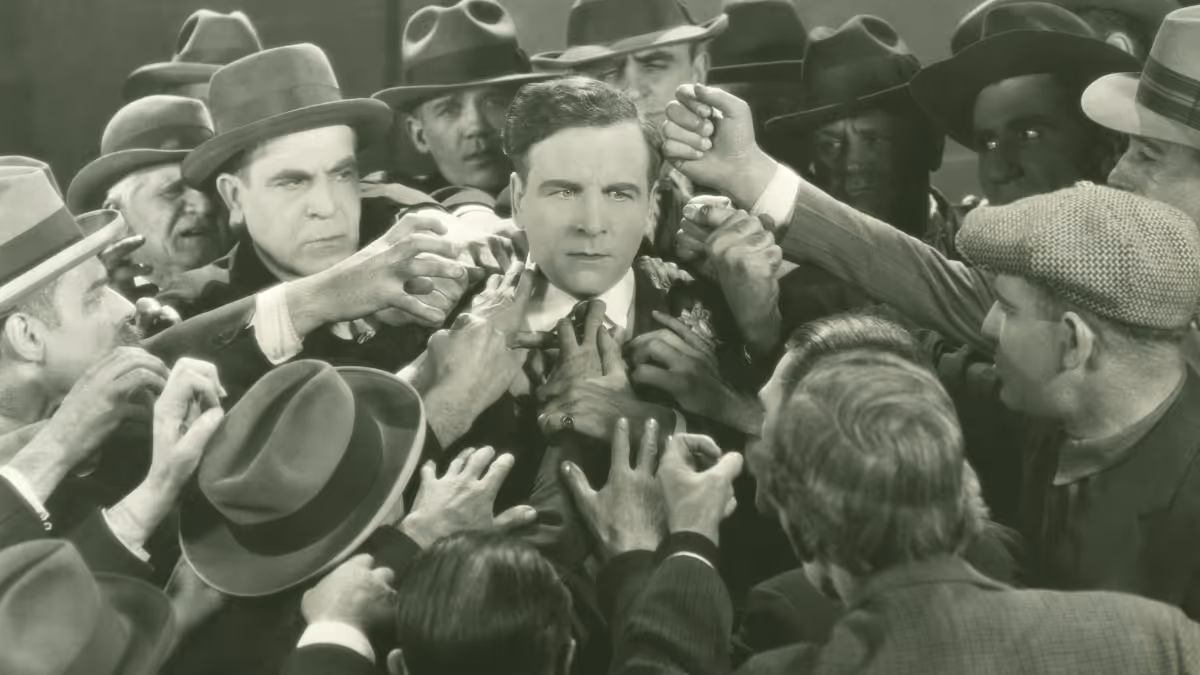
Watching the events that unfolded dual-screen on Wednesday the 6th of January, I was struck by a number of observations. The subversion of American democracy by a seditious mob, whipped into rage and fury by a president’s lies, storming the capitol and putting Lawmakers and staff directly in harm’s way. The sight of gleeful, rioters as they milled around the Senate floor, sat at Speaker Pelosi’s desk, waltzed around the capitol rotunda with ‘souvenirs.’
Xenophobia as political capital.
December 14, 2020
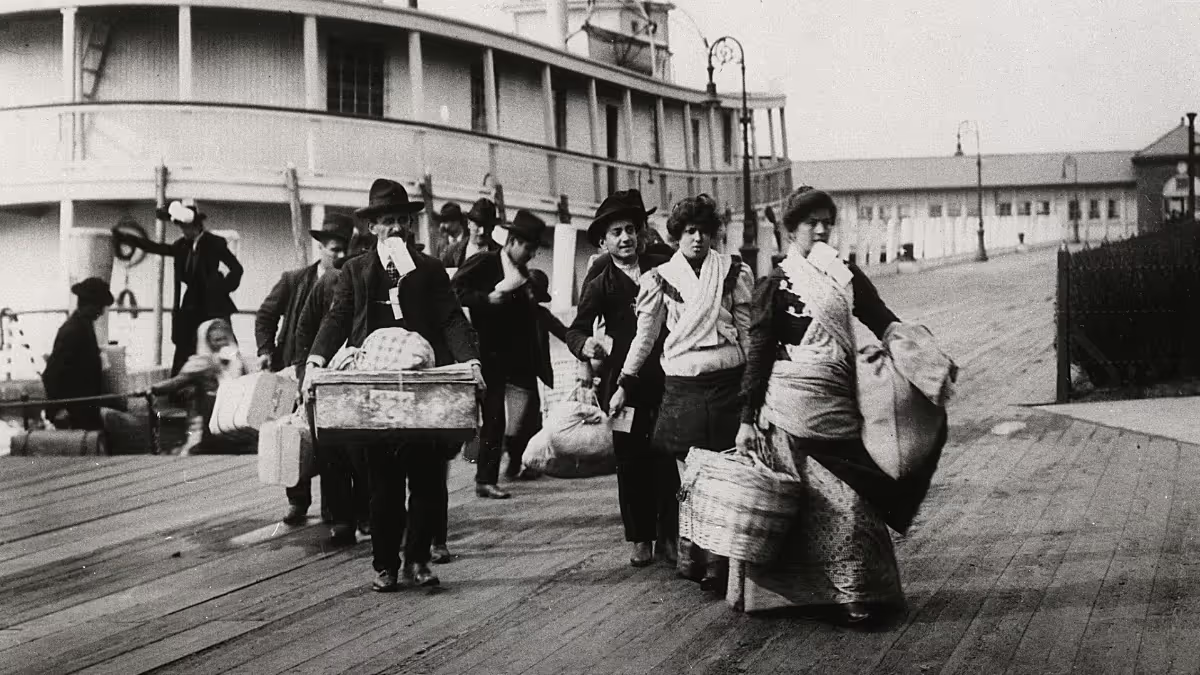
Last year, Denmark’s voters decided for a change. They moved decidedly away from the right and center-right bloc of parties to vote for the center-left Social Democrats and the smaller left-wing parties. This move wasn’t altogether unsurprising. The previous government was messy, small, and would be hard to understand for most Anglo-American readers.
Political messaging: threat saliency over substantive desires.
December 10, 2020
[A short essay I wrote in January 2019 about threat and security in political messaging] Democracy is messy. It’s the nature of governance by many; it’s the nature of anything directed by many! Conflicting opinions and waves of thought conflicting with apathy and disinterest lead to a system that can quickly go from policy victory to policy defeat if the right constituents are activated

A nautical Republican analogy.
December 7, 2020
[Here's an essay I wrote in January 2019. Even with Trump exiting (slowly) stage right, the long transformation of his party that resulted in his victory won't be shaken for some time. American Conservatism is intellectually weak and politically weaker in 2020, I'm not sure where the movement goes from here.]Conservatism in the United States has long revolved around strong but limited government.
On the kerfuffle over “defund the police”
December 3, 2020
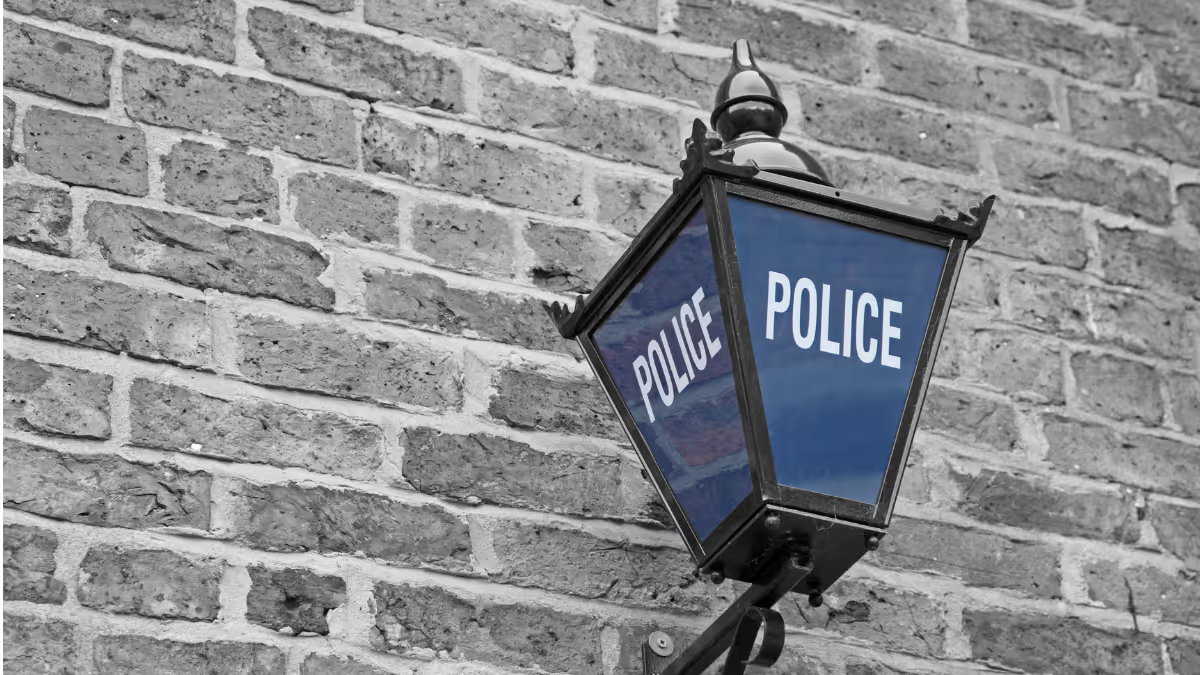
Former President Barack Obama rattled the proverbial hornet's nest on Tuesday. Appearing on Peter Hamby’s Snapchat series “Good Luck America,” Obama said the following when asked about his advice to activists who use the phrase ‘Defund the Police’: "If you believe, as I do, that we should be able to reform the criminal justice system so that it's not biased and treats everybody fairly, I guess you can use a snappy slogan like 'Defund The Police,'